• Massiv — solid, inside and out

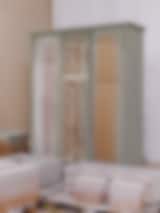
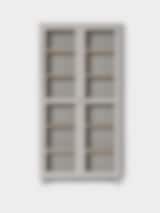
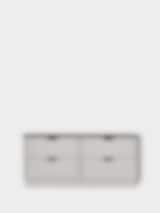
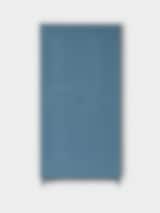
    chest of drawers and wardrobe
    a drawer pulled out

    Wood, as it is

    There is something straightforward and intuitive about solid wood. What the hand encounters at the surface is the same material that lies beneath. The wood is itself, inside and out.

    Perhaps this is the reason we have lived with wood around us for so long. It is a material we understand through the senses. We feel its temperature with our hand, see the grain and notice the difference between a freshly sanded surface and one that has been used for many years. There is an immediacy to encountering wood that is difficult to separate from the material itself.

    At the same time, it is never entirely predictable. No two pieces of wood are identical. Grain, tone and subtle variations differ depending on how the tree grew and where in the trunk the material came from. Working with solid wood is therefore not about trying to make every piece the same, but about understanding these variations and working with them.
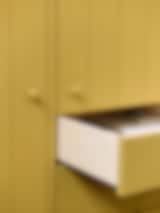

    a drawer pulled out of a yellow wardrobe

    Following the material’s own logic

    That takes knowledge. Wood continues to respond to its surroundings long after the tree has been felled. It moves as temperature and humidity change, and building with it must allow for that movement. Construction, joints and tolerances need to accommodate the material, rather than forcing it to behave like something it is not.

    Living with wood means, in a way, much the same thing. A wooden surface does not remain exactly as it was when new. Light affects its colour. Hands and use leave traces. Soap, oil and other treatments change the way the surface looks and feels. Over time, something of the life around it becomes legible in the material itself.

    This kind of change need not be at odds with quality. On the contrary, one of the particular qualities of solid wood is its ability to carry use and time without losing its identity. A mark may be there in the wood, but beneath it there is still wood. A surface can be cared for and treated again. There is material left to work with.

    A celebration of solid wood

    This thinking is fundamental to Norrgavel’s furniture, and finds its purest expression in Massiv. In many ways, the series is a celebration of solid wood as a material, in one of its truest forms.

    Massiv is made from solid birch, combining strength with a light and relatively understated expression. The wood is carefully selected, while its natural variations remain part of the furniture. Fitting doors and drawers into their frames, constructing large wooden surfaces to accommodate movement and bringing the different parts together with precision all depend on an understanding of how the material actually behaves.

    The surface treatments are chosen with the same understanding. Egg-oil tempera allows the structure of the wood to remain present even when colour is added, while accommodating its natural movement. With miniMassiv, the wood can also be treated with soap, oil or white oil. Each creates a different expression, but the material remains close to the hand.


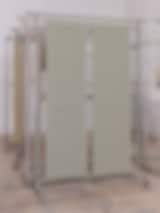
    wardrobe doors hanging out to dry
    a wardrobe that has been repainted and is left to dry

    A lifelong love

    And the relationship with the material continues after the furniture has left the workshop. A Massiv piece that has lived a long life can be one of the most beautiful — there is no reason to undo what time has added. But should the need arise, the furniture can be sent back to Norrgavel’s workshop in Lammhult for renovation or repainting. There, it can receive the care it needs to continue being used, perhaps in a new setting or for a new chapter of life.

    It says something about what quality can mean. Not only the precision of a new piece of furniture, or how it looks on the day it arrives home, but what happens after five, ten or thirty years. How the material receives use. How it changes without being used up. How there is always something there to work with.